



Artriva Studios
Matrimonial Photos That Feel Like You: Comfort Over Posing
Somewhere, there is a person who will one day sit across a table from you. They'll watch you talk about something you love. They'll see you pause, laugh, lean in. And in that ordinary moment, they'll think: I like being here, with this person.
That moment is what a matrimonial photograph is supposed to promise.
Not a model's pose. Not a Pinterest recreation. Not the most impressive version of you — the most recognisable one. The you that the right person is going to fall for anyway.
This is how we think about matrimonial and dating profile portraits at our studio, and it changes almost everything about how the shoot is done.
How to Smile for Photos: The 80/20 Method PRO-Photographers Use
"Say cheese" has produced more bad photographs than any camera ever has. It gives you a mouth shape — teeth bared, cheeks lifted — without the one thing that makes a smile a smile: something behind it.
Everyone knows the result. The photo where you're technically smiling and somehow it still isn't you. Eyes flat, jaw a little clenched, an expression you'd never make in real life because in real life, expressions aren't made — they happen.
This post is about how genuine smiles — the relaxed, teeth-showing, eyes-alive kind — actually get made in photographs. Not with tricks or filters, but with a two-step method any good portrait photographer should be running: one step for the body, one for the face. And a hundred-year-old economics principle explains why the method works so well.
How Professional Photography Quietly Improves Your SEO
Ask a founder how their marketing is going, and you'll usually hear about likes, reach, and follower counts. Ask them how long a visitor stays on their website — and you'll usually get silence.
That silence is expensive. Because somewhere between chasing the feed and neglecting the website, most businesses have the equation backwards: the metric they obsess over rewards being loud for a second, while the metric they ignore rewards being worth someone's time — and it's the second one that search engines, credibility, and eventually sales are built on.
This post makes a case that sounds strange at first and obvious by the end: professional photography is one of the most underrated SEO investments a business can make. Not because Google counts megapixels — it doesn't — but because of a chain of very real, now well-documented mechanisms that runs from the quality of what's on your pages, through how long people stay on them, to where you rank. We'll walk the whole chain, with the evidence.
Archival Prints Explained: Inks, Media, and Why Your Best Photographs Deserve Them
Your best photographs deserve better than a phone screen. But walk into most photo labs asking for "a nice big print" and you'll get a glossy sheet that mirrors every tubelight in the room, shifts colour within a decade, and looks exactly like the poster shop's output next door. There is an entirely different tier of printing — archival fine art printing — and once you've seen your work on it, the difference is not subtle. This post explains what "archival" actually means, why the ink system matters more than the printer's brand name, and how to choose between the media available — canvas, cotton rag, baryta, etching papers and more.
A note on why we care enough to write this: the photography we practise is deliberately clean — controlled light, quiet backgrounds, nothing in the frame that doesn't serve the subject. That style is made for archival printing. A calm, elegant image on a zero-reflection fine art paper reads like an object, not a photo. A cluttered, noisy frame on the same paper just reads as expensive clutter. The print medium rewards restraint, which is exactly the argument for shooting with restraint in the first place.
How to start a modelling career for women in India

Most working models we photograph didn't get spotted somewhere glamorous. They started with a set of honest photographs on a phone, a tidy folder, a kit bag packed the night before, and a habit of turning up on time with clean heels and a base that matches the neck. That groundwork is what this guide covers, including three things most beginner guides skip: how to build your shoot kit, the footwear that's actually worth carrying, and why doing your own camera-ready makeup can get you booked for a whole category of jobs.
We sit on both sides of this at our studio, testing new faces for their portfolios and hiring models for commercial/e-commerce shoots for our clients. The pattern has been the same for years. The women who build steady careers aren't always the most striking in the room. They're prepared, reliable, and honest about the part that actually books their look. So let's start with the kit, one piece at a time.
A practical guide for men starting a modelling career — digitals and polaroids, portfolio organisation, comp cards, posing practice, pricing, professionalism, and parts modelling
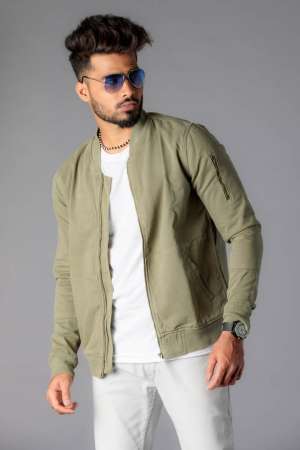
Nobody scouts you at a coffee shop. That story makes for a good interview answer, but for the other 99% of working male models, the career starts the unglamorous way: a set of honest photos, a well-organised folder, a phone that gets answered, and showing up on time with clean shoes. This guide covers exactly that — the practical, boring, career-deciding groundwork.
Having photographed models on both sides of the equation — testing new faces and shooting commercial campaigns where models are hired — I have watched the same patterns repeat. The men who build steady careers are rarely the best-looking ones in the room. They are the best-organised, the most reliable, and the most honest about where they actually fit in the market. Let's build your starting kit, piece by piece.
How to Plan an E-commerce Garment Photoshoot: Logistics, Costs & What Actually Moves Sales
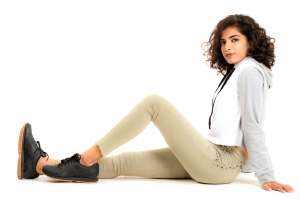
You have a rack of new SKUs, a launch date, and a listing page that needs images by next week. The first search result says you can get it all done for ₹300–500 per garment at a dedicated e-commerce studio. Sorted, right?
Almost. That number is real, and for some brands it is genuinely the right choice. But before you book, you should understand what that price buys, what it quietly costs you, and what a customised shoot actually involves — because the logistics behind apparel photography decide more about your conversion rate than most brands realise.
This is a planning guide, not a sales pitch. By the end you should be able to budget your own shoot, SKU by SKU.
Behind-the-Scenes Video Is Not the Work
You've seen it. The slow-motion pan across light stands. The photographer crouching, adjusting, gesturing. A lens cap tossed in the air. Cut to music.
It looks impressive. That's the point.
Behind-the-scenes content is now one of the most reliable formats on social media — and for good reason. It feels honest. Unscripted. You're watching someone actually work, not watching an ad. Your guard drops.
But here's a quiet question worth sitting with: what exactly did that video tell you about the final photographs?
Why LinkedIn Is Quietly Ruining Your Profile Photo & How to Fix It

You paid for a professional headshot. It looked incredible on your photographer's screen. Then you uploaded it to LinkedIn & something died in the process.
The grays went muddy. The blacks crushed. That clean, seamless gradient behind you? Now a blocky mess of compression artifacts. Your crisp, confident portrait now looks like it was saved off an old Nokia and screenshotted twice for good measure.
It's not the photo's fault. It's LinkedIn's aggressive image compression algorithm — and it has no mercy for gradients, subtle tonal transitions, or finely detailed backgrounds.
The good news? Once you understand why this happens, you can work around it entirely. Here's exactly how.
Why Bangalore's Discerning Professionals Choose Artriva Studios Over Traditional Photography Services
Are you tired of dealing with photography studios that promise premium quality but deliver disappointing results?
Have you experienced the frustration of unprofessional service, poor print quality, or excessive pricing that doesn't match the value you receive? You're not alone.
Many individuals and families in Bangalore have faced similar challenges with established photography chains. From awful prints to rude staff behaviour, from overpricing to poor follow-ups, the common complaints reveal a disturbing pattern: studios that prioritize volume over quality and profits over customer satisfaction. Recent customer reviews across Bangalore reveal troubling patterns at traditional photography studios:
- Poor Quality Photography & Editing: Customers report receiving photos that look like they were edited by a child, with inconsistent colours and amateurish composition that doesn't justify professional pricing.
- Unprofessional Staff: From rude managers who refuse to listen to complaints, to photographers who miss scheduled appointments, the lack of professionalism is shocking, especially when it comes from established chain of stores claiming decades of experience.
- Print Quality Issues: Wrong dimensions, poor colour reproduction, and low-resolution outputs that fail to meet basic professional standards.
- Pricing Deception: charges being high without delivering proportional quality, lack of clear communication of pricing, and hidden charges.
- Poor Customer Service: Non-Existent After Sales Service/Support, months of delays, inability to reach decision-makers, and complete lack of accountability.
- Lack of Transparency: No written agreements, refusal to provide invoices, unclear turnaround times etc.