


Corporate Dressing Levels for Indian Women | Power to Casual
Written by Artriva Studios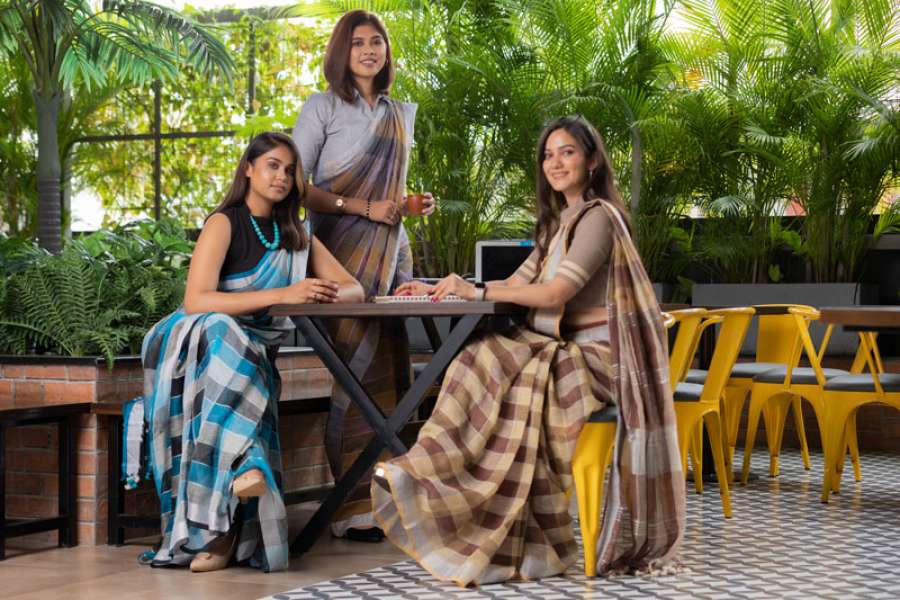
Before you ever say a word, your clothes have already spoken. In the workplace, your outfit shapes how people perceive your confidence, credibility, and leadership — and whether you realise it or not, it's doing a good part of your personal branding for you, before you've opened your mouth.
As a photographer and personal branding specialist, I see this play out constantly, on both sides of the camera:
- The right outfit can elevate a headshot, a presentation, or a client meeting — it doesn't just look good, it changes how the room responds to you.
- The wrong one can make you look unsure, unprepared, or less capable than you actually are — even when your work is excellent.
Good news? You don't need a giant wardrobe. You need clarity on what to wear at what level of formality, and why it works — because once you understand the "why," you stop guessing and start dressing on purpose.
Let's decode the 4 corporate dressing levels for Indian women, with Indian and Western options, the reasoning behind each recommendation, colour and footwear guidance, and where each style actually fits.
How to Use This Guide
Before the breakdown, a quicker way to find your level than reading all four: ask yourself three questions before you get dressed for a work day.
- Who's in the room? Senior leadership and clients pull you toward Formals. Your own team pulls you toward Casuals.
- What decision is being made? If money, hiring, or strategy is being decided in that meeting, dress a notch more formal than the room requires. If it's a working session or a brainstorm, a notch more relaxed builds better rapport.
- Will this be photographed? Headshots, keynote stills, and press photos deserve Level 1 or 2 — even if the actual day would otherwise be casual. Photographs outlive the meeting.
Keep this in mind as you read — the four levels below aren't strict boxes. Most working women live across two or three of them in the same week, sometimes the same day.
Corporate Dressing Levels in India
| Level | Style | When to Wear |
|---|---|---|
| 1 | Business Formals | C-Suite, Leadership, Client Pitches, Board Meetings |
| 2 | Business Casuals | Mid-Level Roles, Presentations, Internal Meetings |
| 3 | Smart Casuals | Creative Roles, Client Lunches, Casual Fridays |
| 4 | Work-Appropriate Casuals | Startups, WFH, Relaxed Offices |
Think of these less as four separate wardrobes and more as one sliding scale — the same well-chosen blazer can move you from Level 2 to Level 1 in the time it takes to put it on.
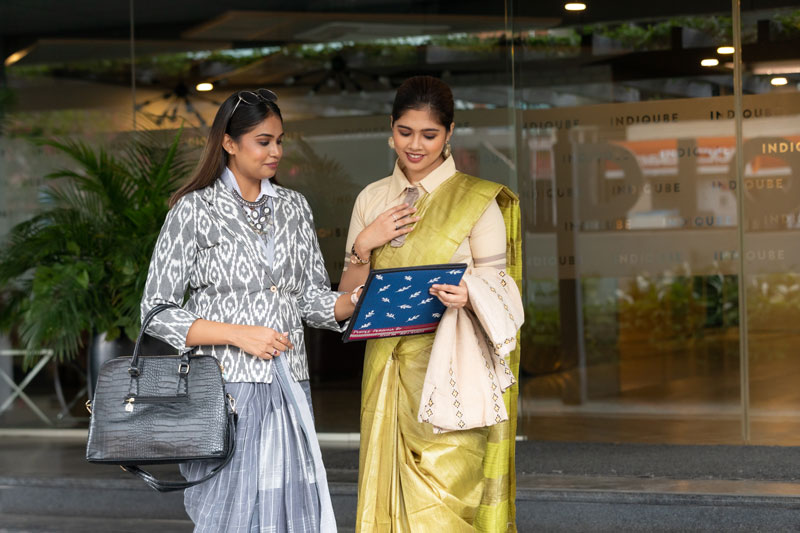
Level 1: Business Formals (Power Dressing / C-Suite)
Purpose: Builds authority, creates impact and trust. Personal Branding Angle: This is your "leadership uniform." Use it to signal: I'm in control. I make decisions. You can rely on me.
Why This Works
Structure is doing most of the work at this level. A tailored blazer squares off the shoulder line, and a squared shoulder line reads — almost universally, across cultures — as authority. It's the same visual logic a military uniform or a judge's robe uses, just softened for an office. Solid colours and minimal patterns matter for a related reason: patterns pull the eye around a room, but solid, well-fitted fabric holds attention on your face, which is where you actually want it during a negotiation or a pitch. This is also why photographers ask clients to avoid busy prints for headshots — the same rule that flatters a portrait flatters a boardroom.
Indian Wear Options
- Solid silk or crisp cotton sarees (minimal borders)
- Structured sarees with tailored blouses
- Well-fitted kurtis with straight trousers + blazer
- Long jackets or Nehru jackets over kurta sets
Western Wear Options
- Tailored pantsuits (matching blazer + trousers)
- Formal sheath or pencil dresses (knee-length or below)
- Crisp button-down shirt + tailored trousers + blazer
- Blazer over solid blouse + trousers
Recommended Colours
- Navy, Charcoal, Black, Ivory
- Deep jewel tones: Emerald, Burgundy, Royal Blue
These colours share one trait: high contrast and low distraction. They photograph cleanly under office lighting and camera flash alike, which is part of why they've become the unofficial uniform of leadership everywhere, not just in India.
Footwear
- Closed-toe heels or block heels
- Polished flats (if heels aren't comfortable)
Closed-toe footwear finishes the "put-together" signal that a blazer starts — open-toe sandals, however elegant, read as slightly more relaxed, which undercuts the authority you're building everywhere else in the outfit.
Where & For Whom?
- CXOs, VPs, Senior Managers
- Client negotiations, boardrooms
- Media appearances, keynote speeches
- Professional headshots for leadership roles

Level 2: Business Casuals
Purpose: Being professional and approachable. Personal Branding Angle: Confidence without intimidation — the perfect balance of authority and warmth.
Why This Works
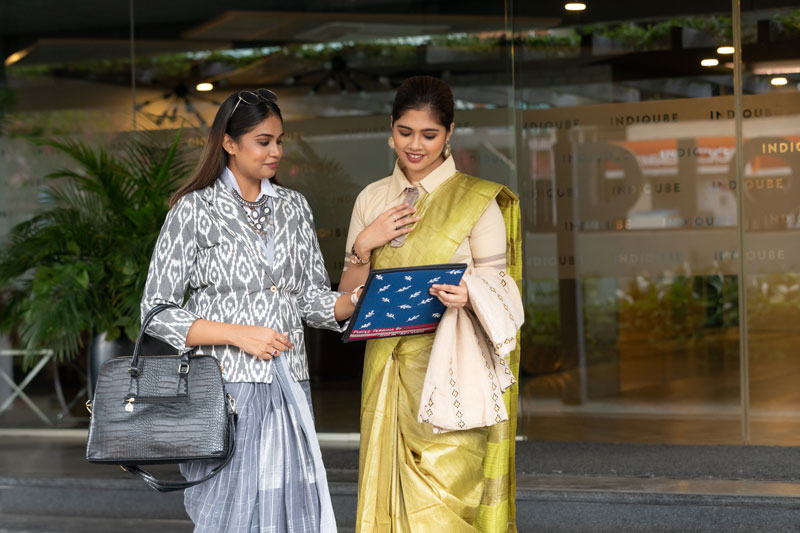
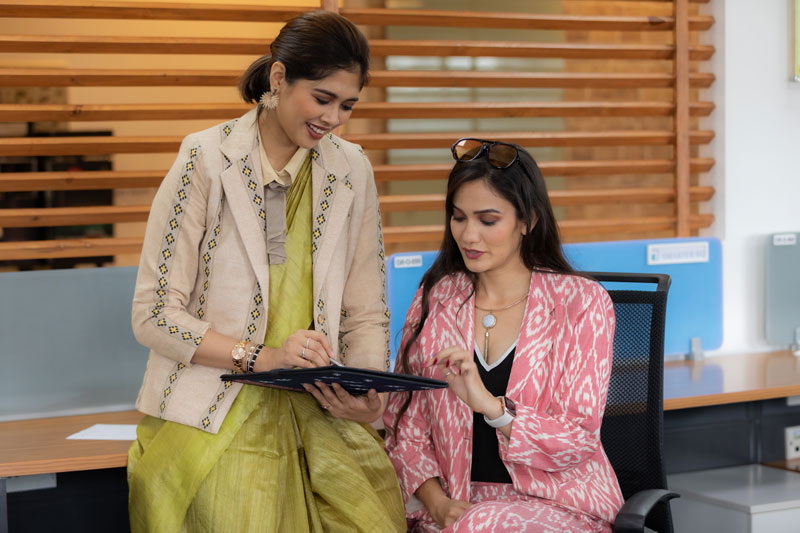
This level trades some of Level 1's structure for softer fabrics and slightly more colour, and that trade is deliberate. A blazer says "authority." A cardigan or light jacket over a kurti says "authority, but approachable" — the silhouette is still tidy, but the fabric moves and drapes rather than holding a rigid line. This is the level where colour starts doing more work than cut: earthy pastels and muted tones read as warm and easy to talk to, without slipping into the visual softness that reads as too casual for a client-facing role.
Indian Wear Options
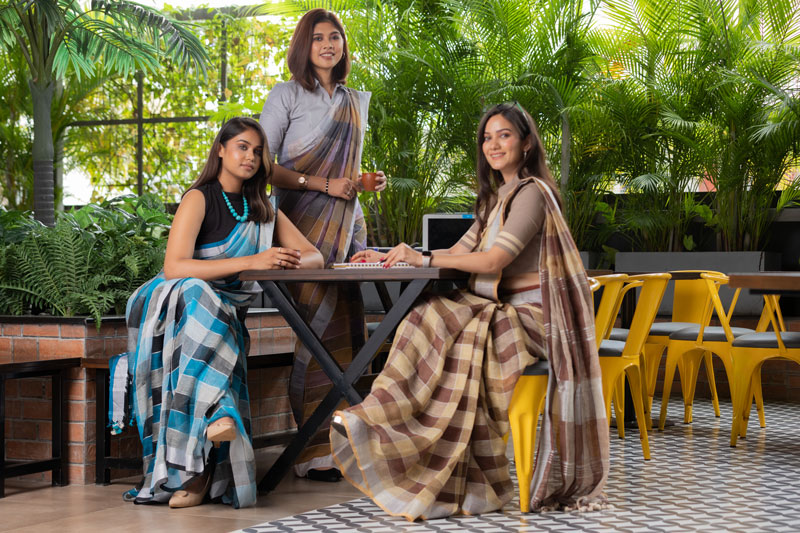
- Linen or soft printed sarees (elegant, not flashy)
- A-line or straight kurtis + cigarette pants
- Kurtis with light blazers or jackets
- Solid kurta sets in luxurious fabrics
Western Wear Options
- Solid or subtle print shirts + ankle-length trousers
- Blouses + structured pants
- Midi or sheath dresses (with sleeves or blazer)
- Knitted tops with light layers
Suggested Colours
- Soft blues, maroon, wine
- Earthy pastels (beige, olive, dusty rose)
- Teal, muted mustard
Footwear
- Mules, loafers, block heels, ballet flats
Notice the shift from Level 1: closed-toe is no longer the only acceptable option. Mules and loafers keep the polish while adding just enough ease to match the rest of the outfit.
Where & For Whom?
- Mid-level managers, team leads
- Internal presentations, training sessions
- Everyday office wear in formal environments
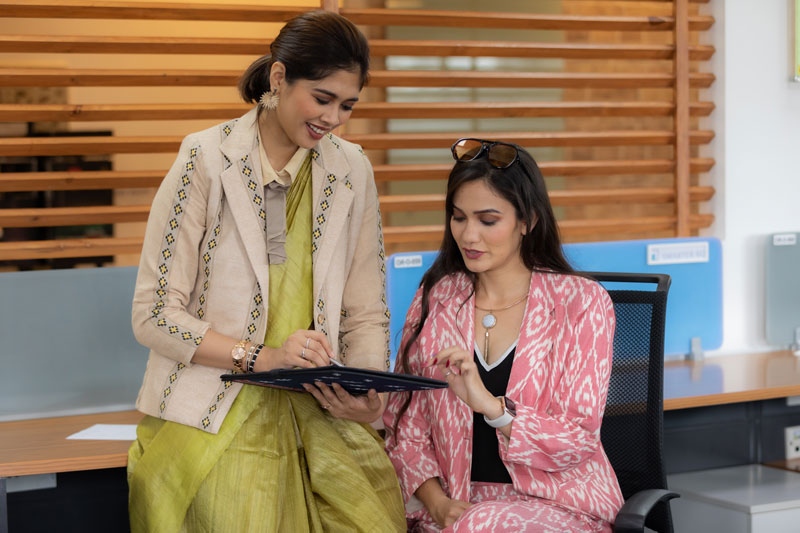
Level 3: Smart Casuals
Purpose: Stylish, modern, relaxed — but still very polished. Personal Branding Angle: This style shows creativity and adaptability. Great for modern workplaces and roles that require fresh ideas.
Why This Works
This is the one level where breaking a rule is the point. Asymmetry, colour-blocking, and fusion pairings (a cotton saree with a structured blouse, or a kurta over jeans) signal that you think outside conventional lines — which is exactly the impression a designer, marketer, or creative lead wants to give. The polish still has to be intentional, though: a slim-fit dark wash jean reads as "considered," a faded, ill-fitting one reads as "didn't think about it." Smart casual is casual with effort still visible, not casual because effort stopped.
Indian Wear Options
- Printed / asymmetrical kurtas + jeans
- Indo-western fusion sets
- Cotton sarees with trendy blouses
- Long shrug or jacket over kurti/tee
Western Wear Options
- Tops + culottes/chinos
- Slim-fit jeans (dark wash) + blouse/shirt
- Layered pieces (shrugs, cardigans, long jackets)
- Patterned shirts, peplum tops
Colours
- Pastels, warm hues, colour-blocking
- Stylish prints (stripes, geometrics, florals)
Footwear
- Stylish sandals, wedges, loafers
Where & For Whom?
- Creative teams, marketing, design, tech
- Client lunches, informal meetings
- Casual Fridays in corporate settings
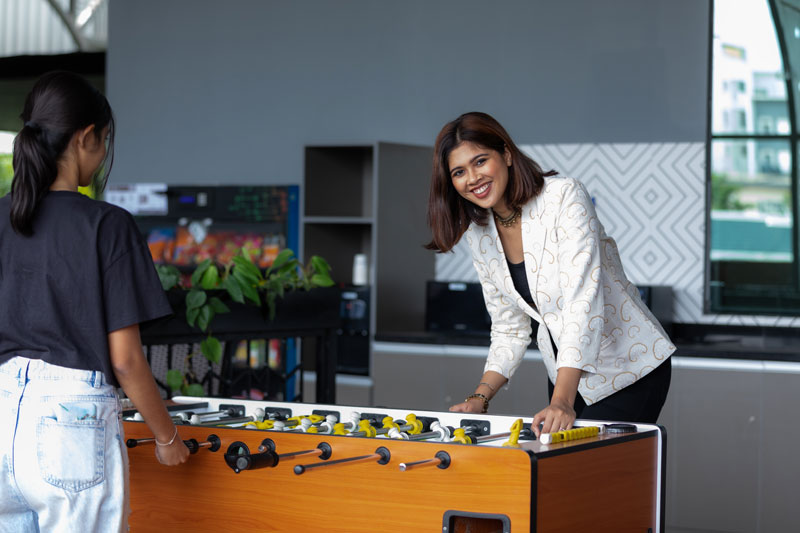
Level 4: Work-Appropriate Casuals (Startups / Remote Work / Relaxed Dress Codes)
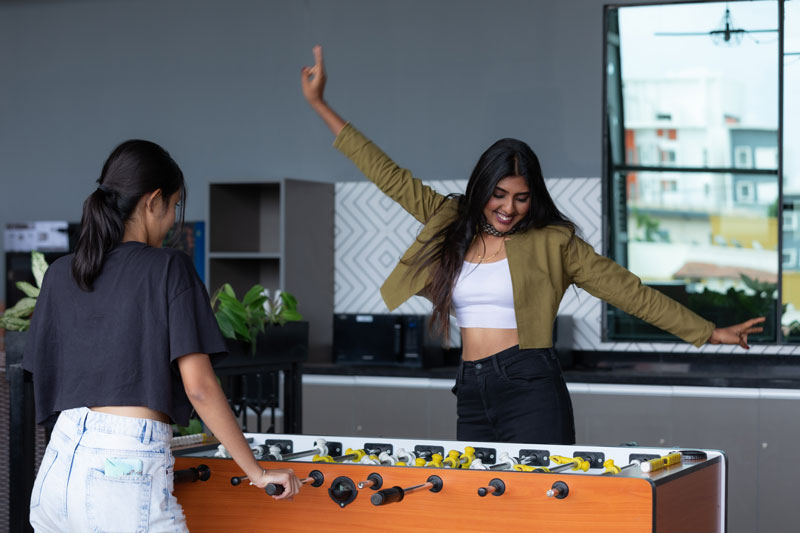
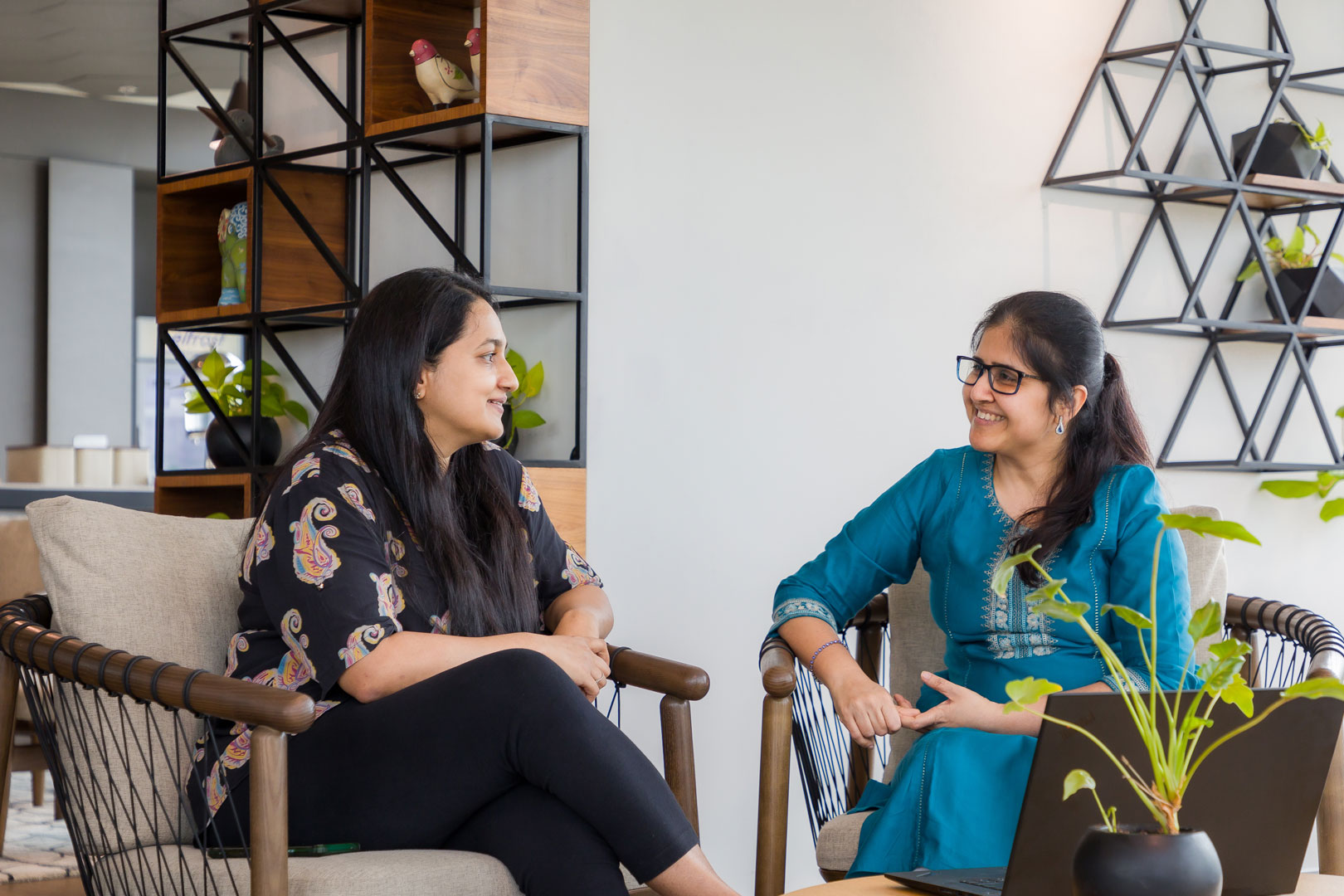
Purpose: Comfort-first, but still emphasising neatness and being presentable. Personal Branding Angle: Even in relaxed settings or on Zoom calls, how you show up visually still builds or breaks trust and credibility.
Why This Works
The instinct at this level is to stop trying — resist it. "Work-appropriate casual" still means clean lines, no visible wear, and fabric that holds its shape on camera. A soft T-shirt and jeggings can look just as put-together as a blazer if the fit is right and the fabric isn't stretched or faded; the bar hasn't disappeared, it's just moved. This matters more than people expect on video calls specifically — a webcam compresses colour and detail, so a slightly wrinkled top or a washed-out colour reads worse on Zoom than it would in person.
Indian Wear Options
- Cotton kurtis + leggings or palazzos
- Co-ord kurta sets
- Relaxed-fit kurtas
Western Wear Options
- Smart T-shirts (solid or minimal prints)
- Soft blouses or relaxed shirts
- Stretchable trousers, jeggings, or dark jeans
- Casual dresses (knee-length, minimal prints)
Colours
- Soft neutrals (beige, blush, grey)
- Muted pastels
- Pop of colour through accessories
Footwear
- Clean sneakers
- Comfortable flats
- Slip-ons
Where & For Whom?
- Startups, remote work, WFH
- Brainstorming sessions, creative roles
- Casual company cultures (tech, media, agencies)
What Happens When You Get the Level Wrong
Both directions cost you something, just in different currencies. Show up overdressed to a casual team brainstorm in a full Level 1 suit, and you can accidentally signal distance — like you're not quite one of the team, or you're dressed for a meeting that isn't this one. Show up underdressed to a board presentation in Level 4 casuals, and the room's attention drifts, even briefly, from your content to your appearance — exactly the opposite of what you want when you're the one presenting the numbers.
The safer error, when genuinely unsure, is to go one level more formal than you think you need. Removing a blazer takes five seconds. Nobody in a boardroom has ever conjured one from nowhere.
BONUS TIPS: Comfort Dressing
Comfort doesn't mean careless. Here's how to stay relaxed and still look professional — and why each of these actually works, not just that it does.
- Choose breathable fabrics: cotton, linen, modal, crepe — these move with you and don't visibly wrinkle at the first sign of AC-to-outdoor temperature swings, which matters more in Bangalore's weather than almost anywhere else.
- Stretchable waistbands or trousers — comfort you don't have to think about during a long client meeting is comfort that shows up as ease in your body language, and that ease reads as confidence on camera.
- Low-maintenance sarees (linen, georgette, blends) — drape and hold their shape through a full workday without needing a mid-afternoon fix.
- Flowy tops with structure at the neckline or sleeves — the structure is what keeps "relaxed" from tipping into "unfinished."
- Layering for AC/temperature control — a thin jacket or shrug is a silent tool for moving between Level 2 and Level 1 without a wardrobe change.
- Cushioned flats or block heels over pointy stilettos — visible discomfort (shifting weight, wincing) undercuts authority faster than almost anything else in a room.
Understanding Basic Colour Psychology in Personal Branding
Colour reads before anyone processes what you're wearing — it's the first thing the eye registers, often before cut or fabric. Some of this is genuinely psychological (darker, saturated colours are consistently read as more "serious" across studies on colour and perception), and some is cultural — navy-and-white as a business uniform, for instance, is a learned association from decades of corporate dress codes, not an innate one. Both matter for how you're read in a room.
| Colour | Message | Why It Reads This Way |
|---|---|---|
| Navy / Black | Power, leadership, trust | High contrast, low visual noise — decades of corporate association reinforce it further |
| White / Grey | Clarity, professionalism | Neutral base colours put visual focus on your face and words, not the outfit |
| Blue | Dependability | Consistently rated the most "trustworthy" colour across colour-perception research |
| Burgundy / Deep Red | Authority with elegance | Red-family tones signal energy and confidence; the deep, muted shade keeps it boardroom-appropriate |
| Pastels | Approachability, softness | Lower colour saturation reads as gentler and less confrontational |
| Teal / Mustard / Wine | Creativity, uniqueness | Less common in standard corporate wardrobes, so they stand out as intentional choices |
Tip: Build a signature colour palette for yourself — two or three colours you return to often. Repetition is what makes a personal brand memorable; people remember "the woman who always wears deep teal" far more easily than someone whose colours change every week.
Accessorising & Grooming — Small Details, Big Impact
- Minimal jewellery = elegant and distraction-free. The same principle from Level 1 dressing applies here: less visual noise keeps attention on your face and your words.
- A structured handbag = instant professionalism. Structure signals intention the same way a tailored blazer does — a soft, slouchy bag can undercut an otherwise sharp outfit.
- Groomed hair = roughly half of overall polish. It's the single fastest thing a room — or a camera — registers about how "put together" you are.
- Nails, watch, light makeup = the finishing touches that signal attention to detail, which people unconsciously extend to assumptions about your work quality too.
These details matter in photographs, but they matter just as much on video calls — a webcam is an unflattering, low-resolution judge of grooming, so what barely registers in person can read as noticeably unkempt on Zoom.
Build a Versatile Wardrobe (Mix the Levels)
You don't need fifty outfits — you need pieces that move easily between two or three levels. This is also the most cost-effective way to dress well: a blazer that works across Levels 1 and 2 earns its price back in a way that ten single-occasion outfits never will.
Worth investing in:
- 2 well-fitted trousers (black + beige/navy)
- 1–2 blazers (neutral + a signature colour)
- Neutral skirts or culottes
- High-quality kurtis (solid + printed)
- A power saree and an easy-care saree
- Comfortable yet stylish footwear
- Good innerwear — absolutely essential, and the most overlooked item on this list
Note: Keep 1–2 "Power Outfits" ready to go, pressed and hanging, for the days that don't give you advance warning. The best client-pitch outfit is the one that's already clean and ironed when the meeting gets moved up to tomorrow morning.
Final Thoughts: Dressing Is Not Vanity — It's Strategy
Every outfit is a message. Every colour, cut, fabric, and accessory contributes to your personal brand, whether you're choosing deliberately or on autopilot.
You don't have to follow fashion trends. You just need to dress with intention — understanding not just what to wear, but why it works, so you can adapt the principle to any situation instead of memorising four fixed outfits.
Wear what expresses your competence, confidence, and individuality — at the right level, in the right place.
Because when your outfit works for you…
You walk differently. You speak differently. You own the room.

Latest from Artriva Studios
- Matrimonial Photos That Feel Like You: Comfort Over Posing
- How to Smile for Photos: The 80/20 Method PRO-Photographers Use
- How Professional Photography Quietly Improves Your SEO
- Archival Prints Explained: Inks, Media, and Why Your Best Photographs Deserve Them
- How to start a modelling career for women in India
Image Gallery

https://artriva.com/blog/item/53-corporate-dressing-levels-for-indian-women-what-to-wear,-when-why#sigProIdd5475987d8